
A root canal procedure uses cleaning liquids, filling cones, pastes, and restoration compounds to seal an infected tooth from the inside out. This combination of materials is precisely what enables the treatment of a tooth infection, preserving a tooth that would otherwise require extraction.
It’s important to understand what actually goes inside your tooth during treatment; it can make the whole process feel far less mysterious. In this article, we will discuss every stage of restorative dentistry materials used in a root canal, from initial cleaning to the final dental restoration.
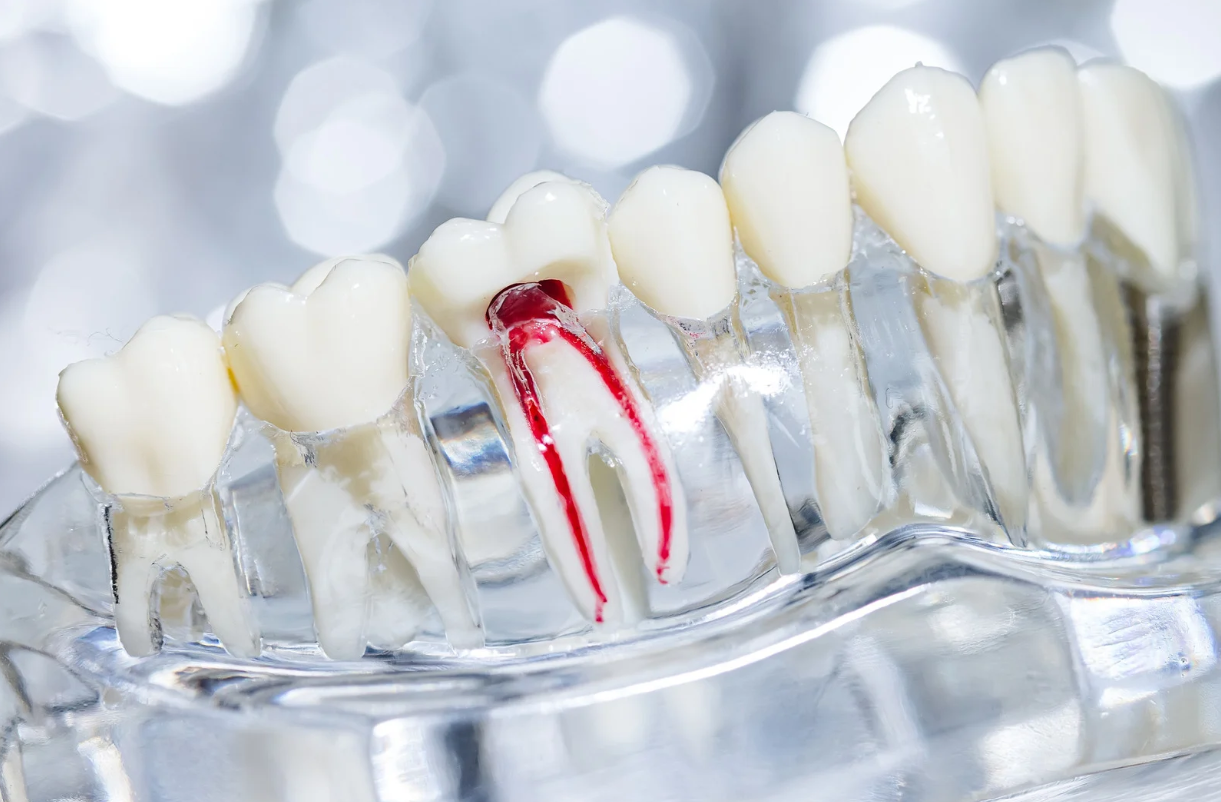
What Material Is Used for Root Canal Treatment?
Root canal treatment uses different categories of materials working together: cleaning and disinfecting liquids, a core filling material, sealers and cements, and finally a restoration to protect the tooth long-term. Each stage plays an important role in tooth preservation.
According to the American Association of Endodontists, over 15 million root canals are done each year in the United States. This makes it one of the most typical treatments in dental care today.
You need to understand that each material’s specific job helps explain why root canal treatment has such a high success rate. Every layer, from cleaning to final restoration, serves to keep bacteria out and your natural tooth intact for the future.
Cleaning and Disinfecting Materials Used First
Before any filling is inserted, your dentist completely cleans and disinfects the inside of your tooth using a specific set of liquids and pastes designed to remove bacteria.
Sodium Hypochlorite
Sodium hypochlorite is a liquid used to remove bacteria and dissolve dead tissue inside the canal. This makes it one of the most crucial disinfectants in the whole process.
EDTA Solution
EDTA solution removes the smear layer left behind after cleaning and softens the canal walls slightly to improve the bonding of subsequent material.
Calcium Hydroxide
Calcium hydroxide is a paste that can sometimes be inserted inside the root between visits to remove any remaining germs before the tooth is permanently sealed.
Core Filling Materials That Seal the Root Canal
When the canal is fully cleaned, your dentist fills the space with a core material designed to permanently remove bacteria. This step is essential for successful canal obturation.
Gutta-Percha
Gutta-percha is a spongy material made from plant sap that is formed into gutta-percha cones to fill the main root space. It remains the most popular material used for root canal fillings in modern dentistry. Many dentists suggest gutta-percha because it’s flexible enough to conform to the shape of the canal and is biologically inert. Also, it is easy to remove later if retreatment is ever required.
Bioceramics
Bioceramic sealer materials are advanced calcium-silicate compounds that bond tightly with root walls. They provide excellent sealing properties and biocompatibility as opposed to older materials.
Resilon
Resilon is a synthetic resin option used alongside matching resin sealers. It provides another option for patients or cases where gutta-percha isn’t the ideal fit.
Sealers and Cements That Hold Everything in Place
Sealers and cements work together with the core filling material to form a tight, bacteria-proof seal the entire length of the canal.
Zinc Oxide-Eugenol
This traditional powder-and-liquid mixture has been used for many years to firmly fix core filling points within the canal.
Resin Sealers
Epoxy resin sealer materials are made from plastic glues that form a strong bond between gutta-percha and the tooth structure. It also improves the overall seal against bacteria.
Mineral Trioxide Aggregate
Mineral Trioxide Aggregate (MTA) is a specialized cement used to repair roots or seal the very bottom tip of the canal, particularly in more complicated situations.
What Restoration Materials Protect the Tooth Afterward?
When the canal itself is sealed, your dentist restores the tooth’s outer structure to protect it for everyday use, completing the dental restoration process. A temporary filling is frequently placed first to seal the tooth between visits, followed later by a permanent filling using composite filling or glass ionomer material to rebuild the tooth’s core structure. For teeth that require more support, a metal or fiber dental post may be inserted into the canal to hold a larger filling or dental crown securely in place.
Especially, back teeth frequently require a crown after treatment because they handle major chewing forces and become more brittle when the pulp has been removed.
Frequently Asked Questions
Which material is best for root canal treatment?
Gutta-percha is the top and most commonly used core material for filling the inside of a tooth during a root canal because of its reliability and biocompatibility.
What does sodium hypochlorite do during a root canal?
Sodium hypochlorite kills bacteria and removes dead tissue inside the canal, playing a key role in disinfecting the tooth before filling.
Is a root canal considered emergency dental treatment?
It frequently is. Severe tooth pain or infection often requires prompt care, making root canals a common form of emergency dental treatment.
What is Biodentine used for?
Biodentine is a calcium-silicate material similar to MTA, frequently used to repair damaged root structures or save the tooth’s inner pulp.
Do I need a crown after a root canal?
Many teeth need a crown after a root canal, particularly back teeth, because the treatment may leave the tooth more brittle and prone to fracture.
How long does the filling material inside a root canal last?
Materials such as gutta-percha are made to last a lifetime when properly sealed, though the outer restoration may eventually require replacement over time.
What is chlorhexidine used for in root canal treatment?
Chlorhexidine is used as an extra disinfectant to help remove bacteria that sodium hypochlorite alone may not completely address.
Final Thoughts
Root canal treatment depends on a specific combination of cleaning solutions and core-filling materials, including gutta-percha, sealers, and a final restoration to protect your tooth over the long term. It’s important to understand that these materials help take some of the mystery out of a procedure that ultimately saves natural teeth.
At Missouri Gardens, we are always here to guide you through every step of your root canal treatment with care and expertise. Book your consultation with us now to maintain your oral health and achieve a confident, beautiful smile.