
If you have an infected tooth or a tooth nerve infection, you do not have to suffer while waiting for a root canal appointment. There are ways to reduce dental pain and temporarily manage pain from a cavity or a cracked tooth.
Proper oral pain treatment and temporary dental care can help relieve tooth sensitivity and discomfort. This can make things easier until you see an emergency dentist. The root canal procedure is designed to remove the infection and save your tooth. However, many people experience a severe toothache before treatment.
So, knowing how to manage the pain can make the treatment smoother. This article will explain how to treat pulp infection discomfort and chewing pain. You will also learn how to reduce inflammation inside the tooth root.
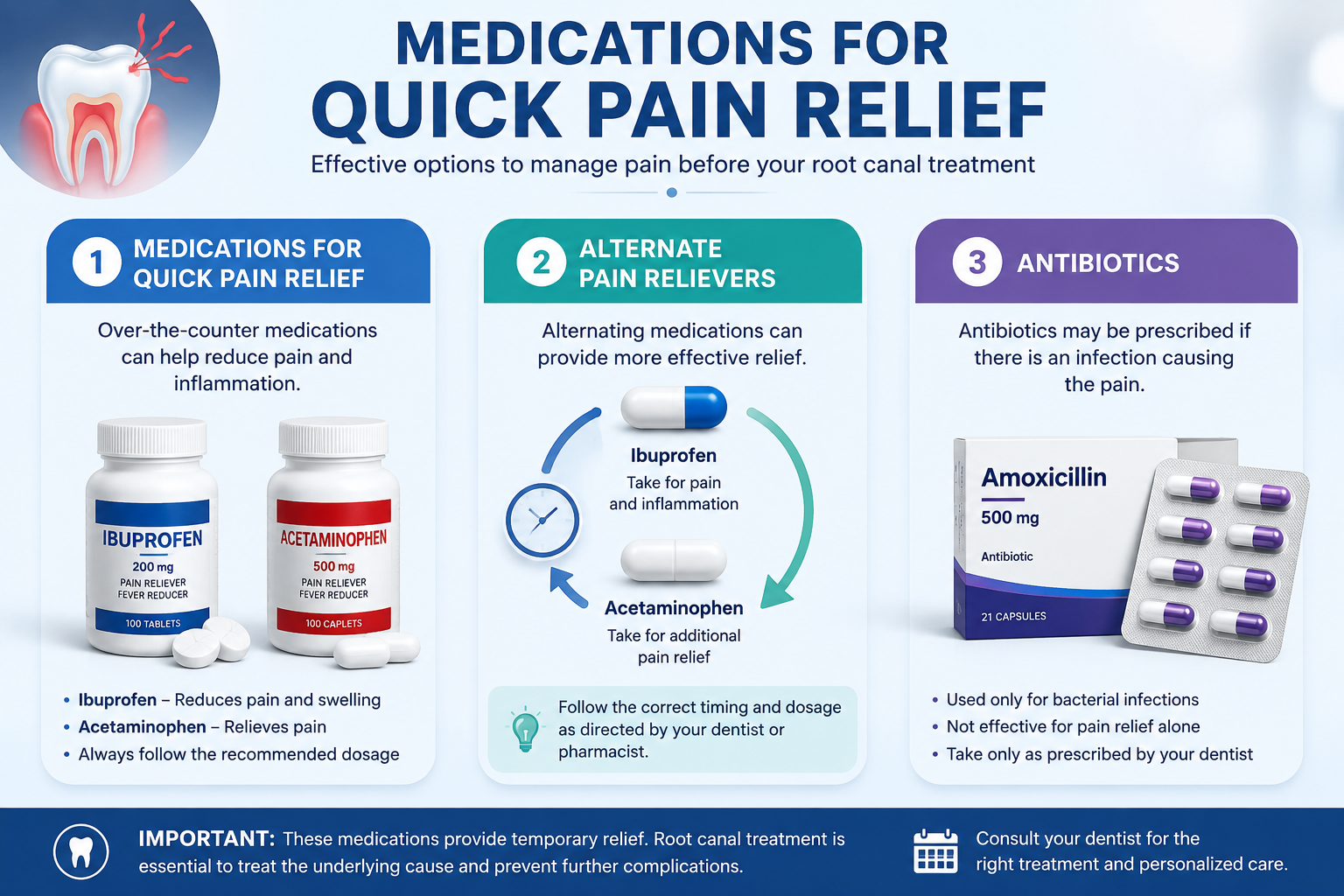
Medications for Quick Pain Relief
Most people use over-the-counter medicine for their tooth pain relief before a root canal. Ibuprofen and acetaminophen work in different ways. That is why switching them can help manage your pain better.
Alternate Pain Relievers
Ibuprofen (Advil, Motrin) helps reduce swelling and inflammation. Acetaminophen (Tylenol) is used to block pain signals. You can switch between them every 3 to 4 hours to manage the pain. But always make sure you are taking a safe dose by reading the label or asking your dentist.
Antibiotics
For an infected tooth or a dental abscess, your dentist may prescribe antibiotics. Completing the full course reduces the infection. This can help lower sensitive tooth nerve pain until your root canal is treated.
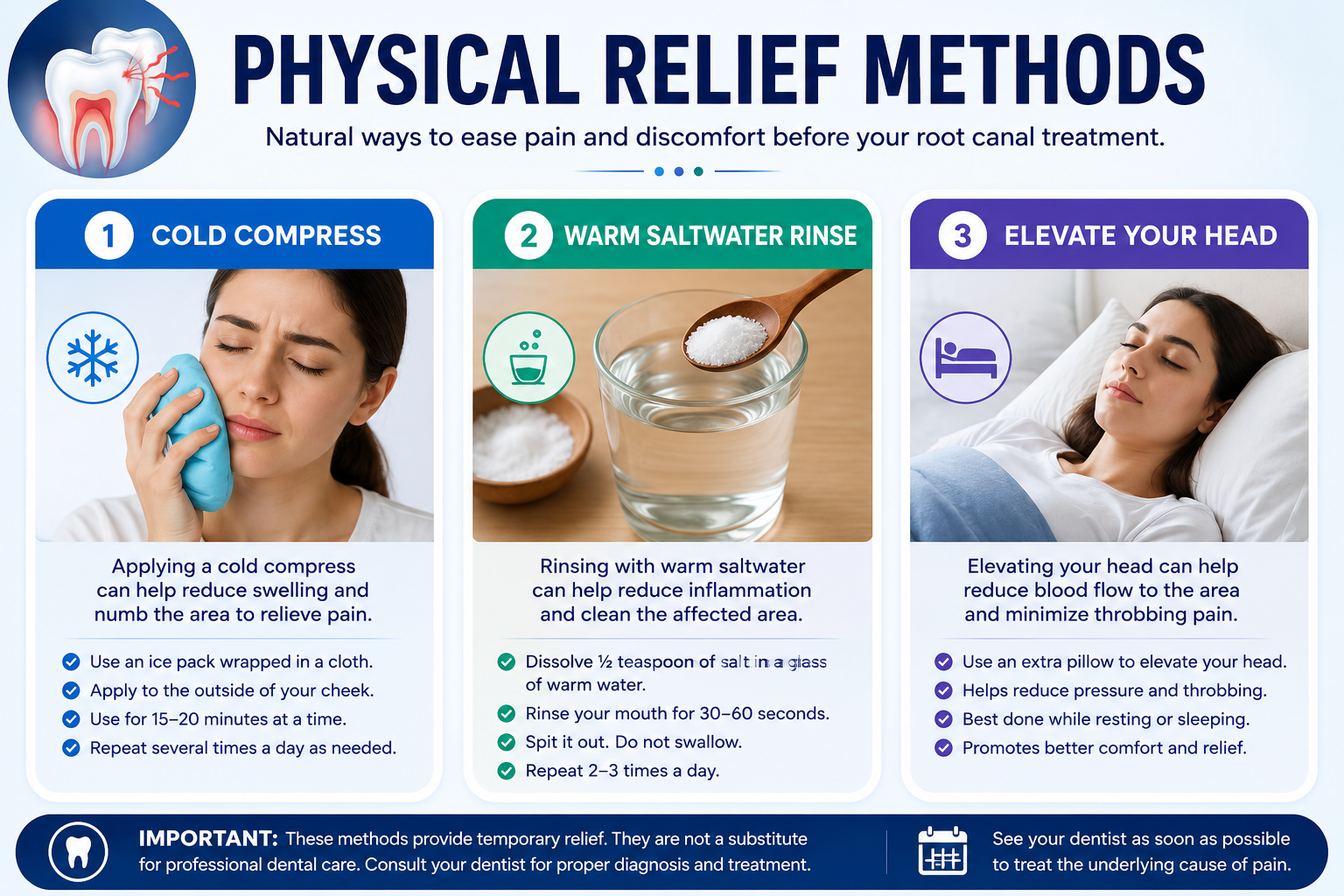
Physical Relief Methods
There are also several physical methods you can use along with medicines. These may provide temporary toothache relief.
Cold Compress
With this method, you can apply a cold pack, wrapped in a towel, to your cheek. Use it for 15 minutes and then take a 15-minute break. This helps relieve throbbing tooth pain at night and reduce swelling around the infected tooth.
Warm Saltwater Rinse
Add 0.5 teaspoon of salt to a cup of warm water, then gently rinse your mouth with it. This will help relieve gum irritation and fight bacteria. It can be useful for cavity pain relief methods.
Elevate Your Head
When you are sleeping or resting, raise your head using extra pillows. This helps to stop blood from pooling in the tooth area. Also, it reduces pain caused by dental pulp infection.
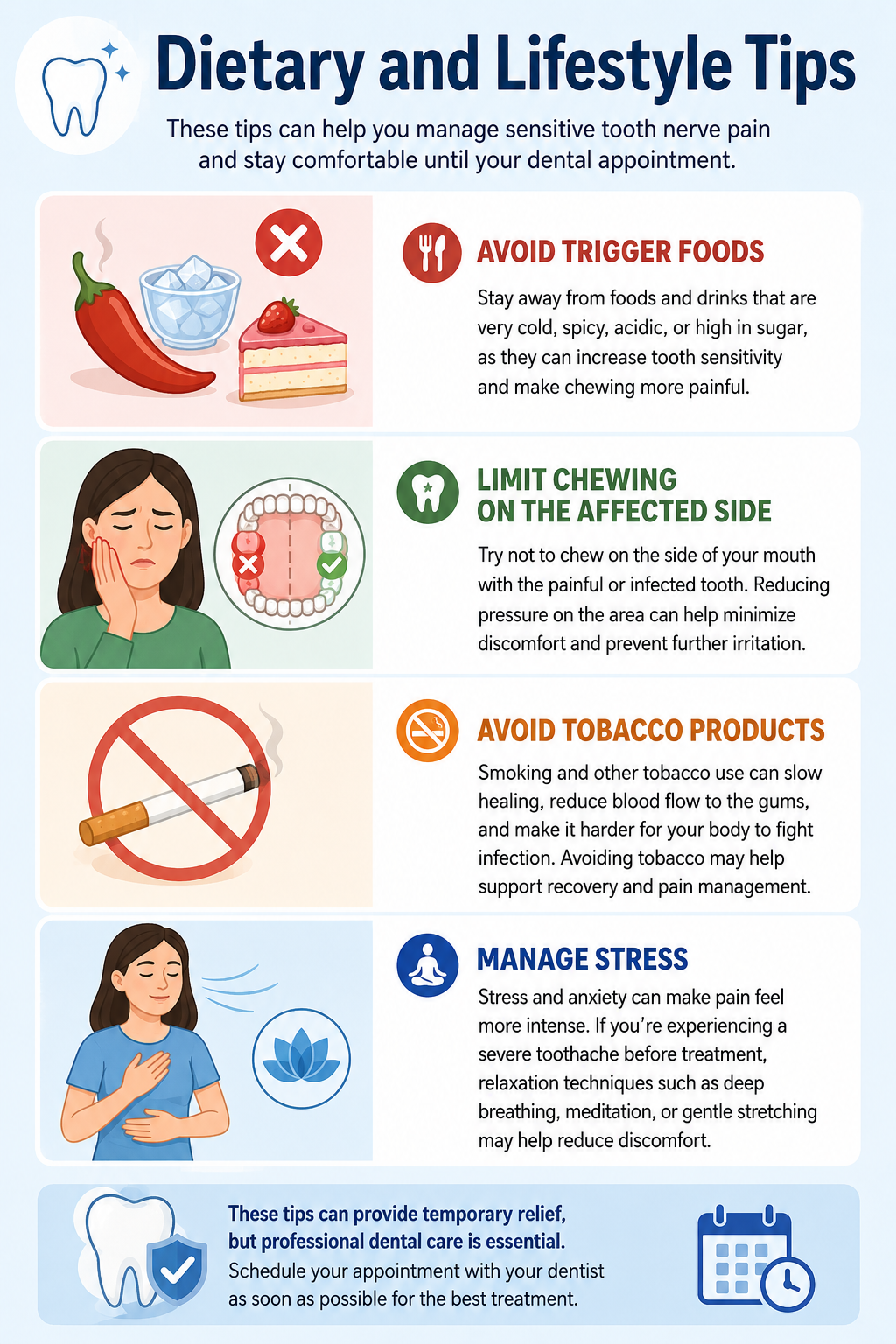
Dietary and Lifestyle Tips
Some foods and habits may worsen sensitive tooth nerve pain. These steps can help you feel better as you wait to see your dentist.
- Avoid Trigger Foods: Avoid foods that are very spicy, cold, or high in sugar. They can worsen chewing pain and tooth sensitivity.
- Limit Chewing: Do not chew on the side of your mouth that has an infected tooth. This will prevent pressure on the tooth and help reduce cracked-tooth pain.
- Skip Tobacco: Smoking can slow the healing process and reduce blood flow. You should avoid tobacco to help your body fight infections and manage pain.
- Reduce Stress: Anxiety can make pain feel worse. If you experience a severe toothache before treatment, deep breathing and relaxation techniques can help.
Home Remedies for Additional Relief
Medication and physical care are not always the only solutions available. Natural methods can also help treat oral pain.
- Clove Oil: Apply a tiny amount of clove Oil to the affected tooth. This may help relieve pain from a tooth nerve infection.
- Cold Water Sips: After you eat, rinse your mouth with cold water. This may help to relieve sensitive tooth nerve pain.
- Honey and Turmeric Paste: This mixture can help relieve irritation and reduce discomfort caused by a pulp infection.
These methods are only temporary. This can help manage discomfort until you see an emergency dentist for root canal treatment.
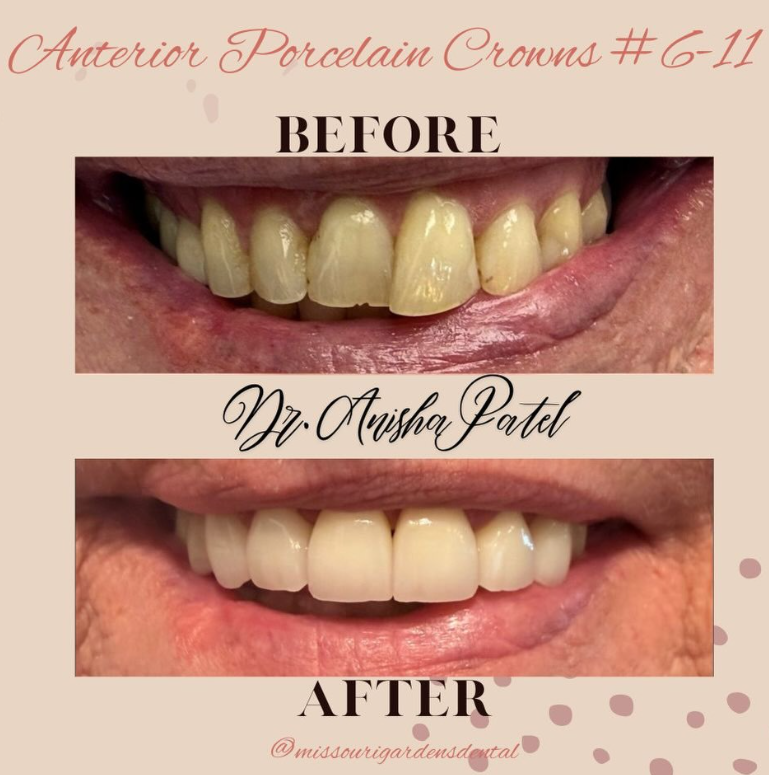
Why Choose Missouri Gardens Dental?
We at Missouri Gardens Dental provide quality dental care in a friendly, comfortable setting. Our team takes the time to listen to each patient and understand their needs before recommending treatment. We offer a full range of dental services, including preventive, restorative, cosmetic, and emergency care, so patients can get everything they need in one place.
By using modern technology and a patient-focused approach, we’re helping people maintain healthy smiles and good oral health. Our commitment to personalized care, comfort, and long-term results makes us the most trusted dentists for families in Clearwater.
FAQs
How can I stop the pain while waiting for a root canal?
You can help relieve pain by using ibuprofen, acetaminophen, cold compresses, and warm salt water rinses. Also, do not chew food on the infected side.
How bad is the pain before a root canal?
Pain can vary from tooth sensitivity to severe throbbing tooth pain at night. This usually happens if the nerve in the tooth is infected or there is swelling around the tooth.
How to get relief from root canal pain?
You could get temporary relief by using over-the-counter painkillers, cold compresses, and warm saltwater rinses. Home treatments such as clove oil or turmeric paste might also be useful.
How long does root canal pain last?
Pain before a root canal usually lasts until the procedure. After treatment, mild soreness may remain for several days as the tooth heals.
What kind of tooth pain indicates a root canal?
Serious conditions like severe cavity pain, swelling, discomfort that worsens at night, and sensitive tooth nerve pain. It usually indicates that you may require a root canal.
How to stay calm during a root canal?
You can try deep breathing, listening to music, or discussing anesthetic options with your dentist to help reduce stress and anxiety.
Can I reduce tooth pain naturally before a root canal?
Yes, gentle home remedies such as a warm saltwater rinse, cold compress, and clove Oil can provide temporary relief from pulp infection discomfort.
When to See an Emergency Dentist?
Temporary relief methods can be helpful. But it is important to know when tooth pain may be a sign of a serious issue. If you have severe pain, swelling, or a fever, you should get emergency tooth pain management as soon as possible. Delaying treatment can worsen the tooth nerve infection. It can also cause more serious problems.
If you experience severe toothache before dental treatment, cracked tooth pain, or cavity pain, do not wait. Schedule a consultation with our experienced dentist at Missouri Gardens Dental. Taking early steps can help save your tooth and avoid a lot of pain.