
If you experience tooth infection symptoms, like pain or sensitivity, do not ignore them. This may mean you require a root canal treatment. Early detection of the warning symptoms is a big sign. It can help you save your tooth and avoid more serious complications.
Root canal treatments are very common in dentistry to save badly damaged or infected teeth. They help treat problems such as nerve damage in a tooth or a deeply infected pulp. So, how do you know if you need a root canal?
Let us look at the most common signs and symptoms of an infected molar. These may suggest the need for a root canal.
What is a Root Canal?
A root canal is a type of dental procedure that removes infected or damaged tissue from inside the tooth. The pulp is the soft tissue that contains nerves and blood vessels. If it becomes infected because of decay, trauma, or deep cavities, it can be very painful. Ignoring cavity pain or tooth nerve damage can only lead to more problems. This can also include abscesses or tooth loss.
The dentist uses modern techniques like X-rays and other diagnostic tools. This helps them check for root canal diagnosis indicators. If you notice pain spreading to the jaw, pressure inside the tooth root, or a recurring dental abscess, you should see a dentist immediately.
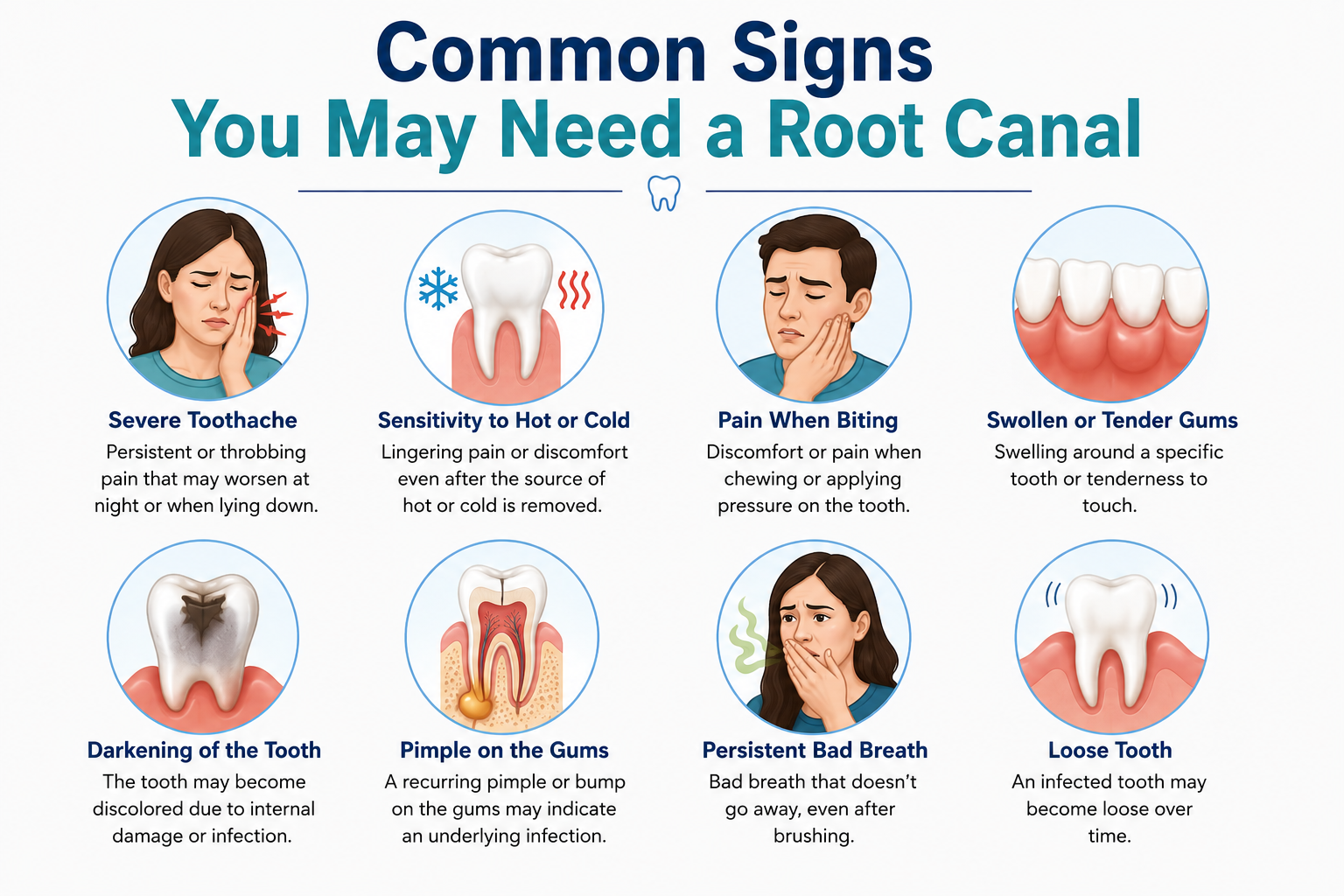
Common Signs You May Need a Root Canal
Knowing the signs you need a root canal can help you act early, before the problem gets worse. Here are some of the main signs:
Persistent Tooth Pain When Chewing
If you feel dental nerve pain signs whenever you bite or chew, this may point to an infected tooth. The pain may be sharp or throbbing and often comes back even after taking over-the-counter painkillers.
Prolonged Sensitivity to Hot and Cold
Your healthy teeth can sometimes feel a little sensitive. However, prolonged sensitivity to hot and cold can be a symptom of tooth pulp damage. If your tooth causes pain from temperature changes, then you should not ignore it. Pain that lasts for hours or days might mean a serious nerve problem.
Swollen Gums Near the Affected Tooth
Swollen gums near the affected tooth are usually a sign of an infection. And signs of root infection should not be ignored. This means that the infection has spread from the tooth pulp and may need urgent care.
Dark Discoloration of Tooth
If your tooth starts to look black or gray, it may be due to the tooth nerve damage. At first, the discolouration may be difficult to notice. However, if ignored, it may become more obvious with time. This cracked tooth infection warning means you should visit your dentist as soon as possible.
Recurring Dental Abscess
An abscess is essentially a pocket of pus that occurs due to an infection. If you have a recurring dental abscess, you may need a root canal treatment. If left untreated, this condition can cause severe pain and swelling.
Additional Indicators to Watch For
You may also experience these oral health symptoms:
- Pressure inside the tooth root: The feeling of fullness or pressure may indicate an inflamed dental pulp.
- Pain spreading to the jaw: The infection may spread to other areas, such as the jaw or neck.
- Cracked tooth infection warning: Even small cracks can allow bacteria to enter the pulp and cause infection.
Early detection of signs and symptoms of an infected tooth nerve can make treatment easier and painless.
How a Dentist Diagnoses the Need for a Root Canal?
A professional dentist’s diagnosis is necessary for proper treatment. Dentists look for signs of deep cavity treatment, tooth pulp damage, and other indicators of a root canal diagnosis. X-rays and pulp testing help identify the severity of the infection. The dentist looks at the situation. Based on the results, they decide on emergency dental treatment if needed.
FAQs
What are the first signs you need a root canal?
The earliest indicators are persistent tooth pain during chewing. Other signs include prolonged sensitivity to hot and cold, and swollen gums near the affected tooth.
At what point does a tooth need a root canal?
You may need a root canal when a tooth has nerve damage or pressure inside the tooth root. Recurring dental abscesses are also a common sign.
Can a tooth heal itself without a root canal?
If the pulp becomes infected, the tooth will not recover on its own. Ignoring it can lead to abscesses and tooth loss.
What happens 10 years after a root canal?
Most teeth remain healthy for a long period after a root canal. A treated tooth can last a lifetime with proper oral care.
What does root canal pain feel like?
When you chew, you may experience throbbing or intense pain. It can also cause sensitivity to heat and cold. Swelling and pressure may occur.
Can a cracked tooth require a root canal?
Even a small crack can allow bacteria into the pulp. This can lead to infection and may require treatment.
How quickly should I see a dentist for a tooth infection?
If you experience chronic pain, swelling, or discolouration, seek emergency dental treatment immediately. Early treatment can help avoid serious problems.

Why Choose Missouri Gardens Dental?
We at Missouri Gardens Dental provide quality dental care in a friendly, comfortable setting. Our team takes the time to listen to each patient and understand their needs before recommending treatment. We offer a full range of dental services, including preventive, restorative, cosmetic, and emergency care, so patients can get everything they need in one place.
By using modern technology and a patient-focused approach, we’re helping people maintain healthy smiles and good oral health. Our commitment to personalized care, comfort, and long-term results makes us the most trusted dentists for families in Clearwater.
Schedule a Consultation!
If you have any tooth infection symptoms, cavity pain, or unexpected swelling, do not take them lightly. You should book an appointment right away. Delaying treatment can make the infection worse. This may cause pain and possibly tooth loss. Schedule a consultation with our dental experts at Missouri Gardens right now to save your teeth and prevent further damage.